
North West Community Network has been accredited by the Living Wage Foundation as a Real Living Wage Employer. We took this step for a number of reasons, but mainly because we think it’s important the community and voluntary sector embodies our values, particularly as the communities we serve face escalating levels of financial hardship.
You don’t need us to tell you that the cost of living has become a huge problem for many people in recent years — you can take your pick of the reasons why. However, it’s worth pointing out that lots of the people directly supported by the community and voluntary sector have faced uphill battles with living costs for a long time.
At North West Community Network, we’re glad so much awareness is building up around the subject. The phrase ‘cost of living’ has become part of common political debate, and we welcome this.
But what exactly does ‘cost of living’ mean for communities? We’re not experts on the subject — our colleagues at the Foyle Network Foundation are — but we have gained some insight from our own work that we would like to reflect on.
We recently partnered with the Northern Ireland Anti Poverty Network on a report for Derry City and Strabane District Council’s ‘Pathways Out of Poverty Action Plan’. Our role was to coordinate input and recommendations from lots of different organisations across the community sector, schools, labour unions and — most importantly — from people with lived experience of financial hardship.
One strand of the strategy is the ‘Free School Day’ initiative that aims to make sending children to school as low-cost as possible. The array of costs go far beyond things you might expect like branded uniforms, or the fact that Northern Ireland is still the only part of the UK without universal free school meals. There are many hidden, and ‘optional-but-mandatory’ costs to families that range from school trips, musical instruments, after school clubs, and even mobile phone pouches.
Our steering group included two school principals — one primary, and one secondary — and parents and carers who are part of a local anti-poverty community group. What was clear is that many school leaders are very aware of the challenges faced by families, and go above and beyond to help reduce costs, but they eventually reach a structural obstacle that single organisations can’t overcome alone.
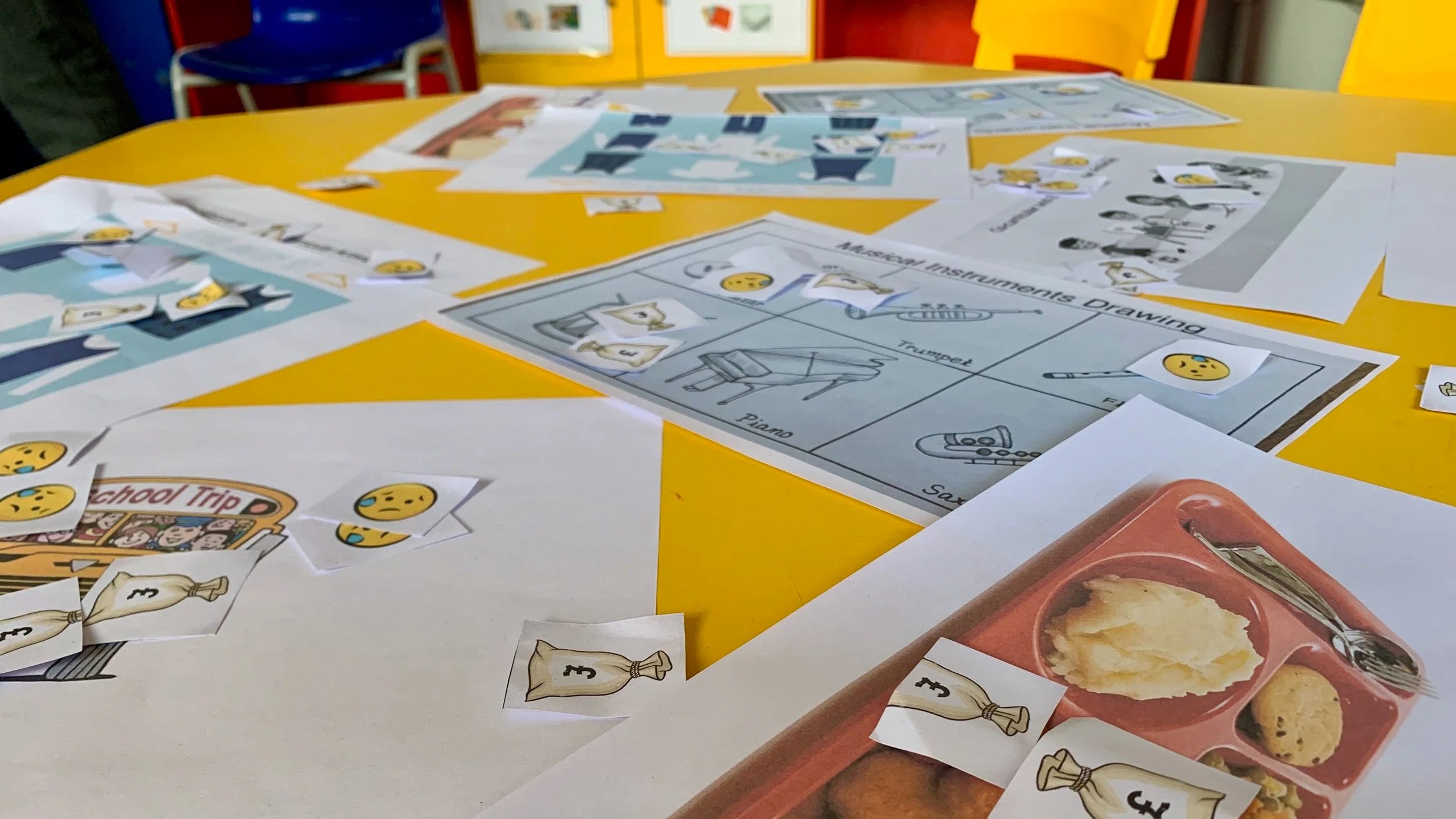
To get a really deep insight into the subject, we went right to the source, and held a focus group with Primary 6 and 7 pupils at Derry’s Holy Family primary school.
“What struck us most was how aware the children are of their own family’s finances. They understood that when their parents or carers were paid meant the difference between getting to do something, or not.”
We asked the children to discuss and prioritise different costs of school: what they value most about school; and what they might be sad to miss out on due to costs. The discussions were mature and nuanced, and there was very strong social awareness and concern for other kids whose families weren’t able to afford things, like school trips or after school clubs. They understood the accumulating cost of school meals for a family of several children over an entire school year — and they made accurate calculations, too!
What struck us most was how aware the children are of their own family’s finances. They understood that when their parents or carers were paid meant the difference between getting to do something, or not. As impressive as the Holy Family pupils are, this isn’t something they should be concerned about: we don’t think it’s right that kids should grow up worrying about their family’s finances.
Does North West Community Network becoming a Living Wage Employer materially change this situation? No — there aren’t that many of us. We also understand that not every community organisation is able to take this step right now, especially taking into account the funding situation across the community sector.
But we do think that making ours a Real Living Wage Sector is the right ambition, and that collectively, we can help shift the dial across society as a whole.
