Kevin Burns Kevin Burns

Supporting minority ethnic communities to tell their stories

In this blog, Kevin Burns, Project Officer at NWCN, reflects on the challenges of community workers engaging with the media, and the responsibilities involved in supporting minority ethnic community groups.
In this blog, Kevin Burns, Project Officer at NWCN, reflects on the challenges of community workers engaging with the media, and the responsibilities involved in supporting minority ethnic community groups.

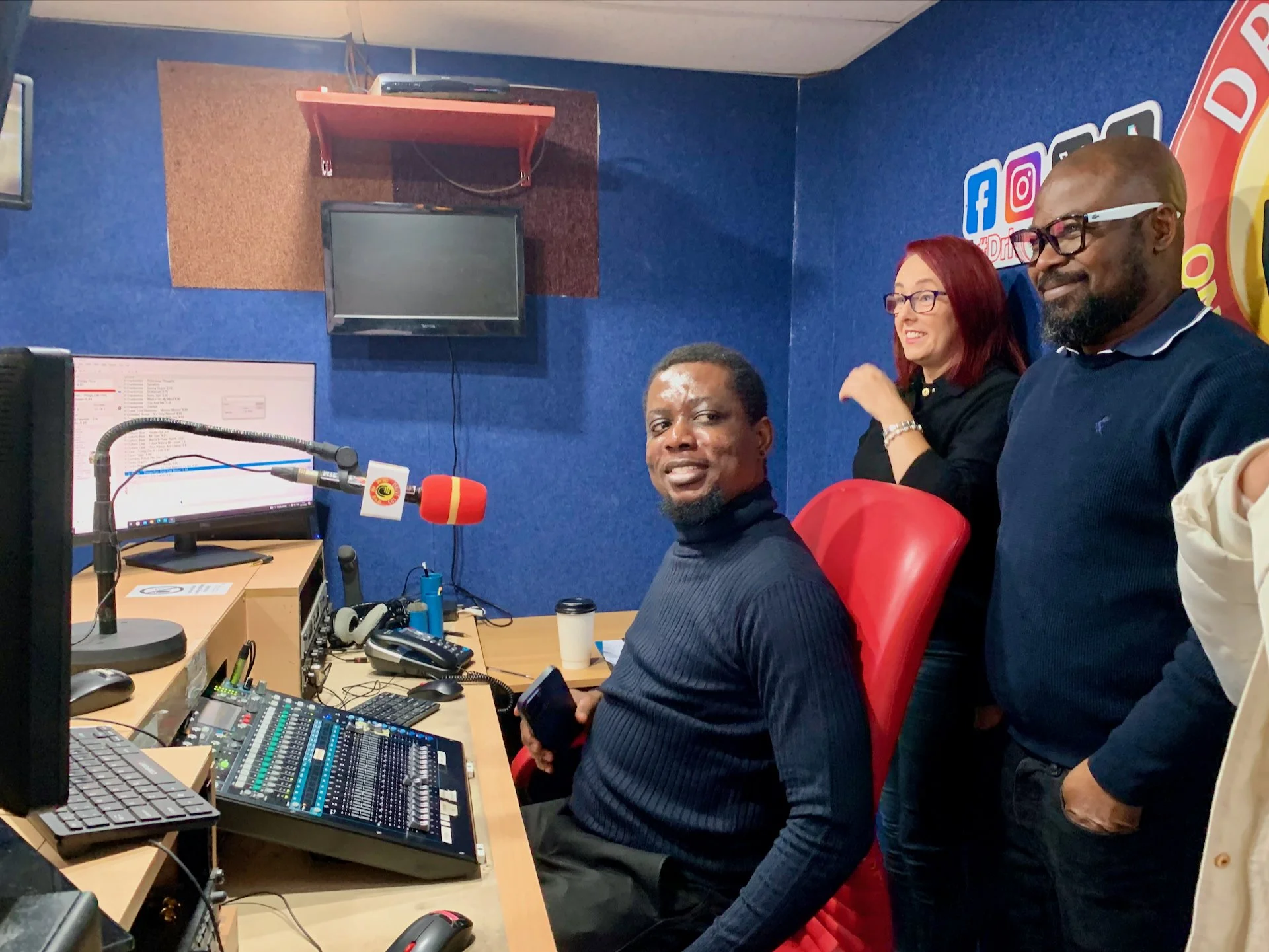
Members of the African Caribbean Community Network at Drive 105 Radio Studios, Derry.

I’m doing a practice radio interview, and something about the pressure of the moment—simulated though it is—suddenly prompts me to describe my work more succinctly than usual: “It’s not about us—”

I’m at the Drive 105 radio studios in Derry with members of community groups from the Filipino, African-Caribbean, and Islamic communities. I’m managing a communications workshop being led by journalist Suzanne Rodgers—it’s part of NWCN’s project supporting community groups from minority ethnic backgrounds. We run the project collaboratively, so the groups themselves decide what areas they want to work on.

Speaking with the media was a recurring theme in our early conversations—the groups told us how they’re regularly expected to comment on political issues like immigration or racist hate crime, when they’re trying to talk about something completely different. One person told us how video bloggers would approach, point a phone-camera at their face, and subject them to racialised questioning—the rest of the group nodded in recognition, showing how ordinary this kind of abuse is.

This range of racialised questioning on social or mainstream media—and sometimes even on the street—is happening more often. Northern Ireland continues to suffer from outbreaks of racially motivated crime, from the racist rioting stemming from Ballymena over the summer of 2025, to the pernicious intimidation the groups tell us they’re regularly experiencing.

"One person told us how video bloggers would approach, point a phone-camera at their face, and subject them to racialised questioning"

It isn’t wrong for journalists to seek the views of people from affected communities, but the groups tell us that this one-dimensional media attention—however well intended—can make it harder to do the community development work they care so deeply about: “I went on to talk about our family fun day, but then he starts asking me about racist graffiti!”

That’s why we’re offering this training to community groups from minority ethnic backgrounds—the kind of media training that’s usually exclusive to public figures—so they can tell their own stories, their own way.

In a preparatory workshop last week, Suzanne explained some common interviewer strategies, like playing devil’s advocate “Some people would say”, deliberately misunderstanding the point, or simply changing the terms of the conversation completely. We discussed strategies for refocussing on our subjects—we’re there for our own causes, not to make the show entertaining!—and reflected on what our core messages actually are.

Now gathered at Drive 105, Suzanne takes everyone, individually or in pairs, into the recording studio while the rest of us listen from an adjacent room. Inspired by conversations with the groups last week, Suzanne poses the aggressive questioning they actually encounter in real life—and plays the disruptive interviewer with aplomb: “But aren’t you taking jobs away from Derry nurses?”, “Some people are worried about extremism in your community.”

I know many of them feel nervous, but it doesn’t show: the interviewees recognise the disruptive patterns, and in their own ways refocus on their chosen subjects. The word “confidence” keeps coming up in later feedback, and one person summarises their learning succinctly, as “how to focus on-topic and keep things within the boundary even when things get escalated.” 

"The kind of media training that’s usually exclusive to public figures—so they can tell their own stories, their own way.

We often criticise politicians for ignoring questions, and answering their own questions instead—but I think we should understand that journalists don’t expect politicians to answer their questions directly, if at all. They know public figures receive media training to deal with adversarial questioning, so they attempt to disrupt that training—with adversarial questioning. It’s a closed loop.

Conversely, the community development skillset is centred on finding common ground. Suzanne tells me after my own practice interview that I started out “too polite” toward her roleplay as a mischievous interviewer veering off-topic. This professional ‘politeness’ may stem from the way community work is structured—we’re incentivised to find agreement, rather than argue a point.

This difference matters to the groups I’m working with: they’ve shown me how minority ethnic communities can feel spoken-about, not spoken-with, and I think one-dimensional media attention can reinforce this feeling. That’s why I’m careful to emphasise that I don’t represent these organisations, or speak for their communities, but support them in their own decisions.

All this is what I’m thinking about when Suzanne asks me, channelling her inner radio-provocateur, “But what right do you have to 'strengthen' minority ethnic community groups? Isn’t that political?” 

I am finally impolite enough to ignore the question, and make a point of my own—“It’s not about us, it’s about them!”

Read More
Kevin Burns Kevin Burns

"I will take NWCN’s values to heart wherever I end up in life."

Will Kochel, from Macalester College in the United States, reflects on his time at NWCN—on all his contributions during his time here, and what he'll be taking back stateside!

Will Kochel, from Macalester College in the United States, reflects on his time at NWCN—on all his contributions during his time here, and what he'll be taking back stateside!

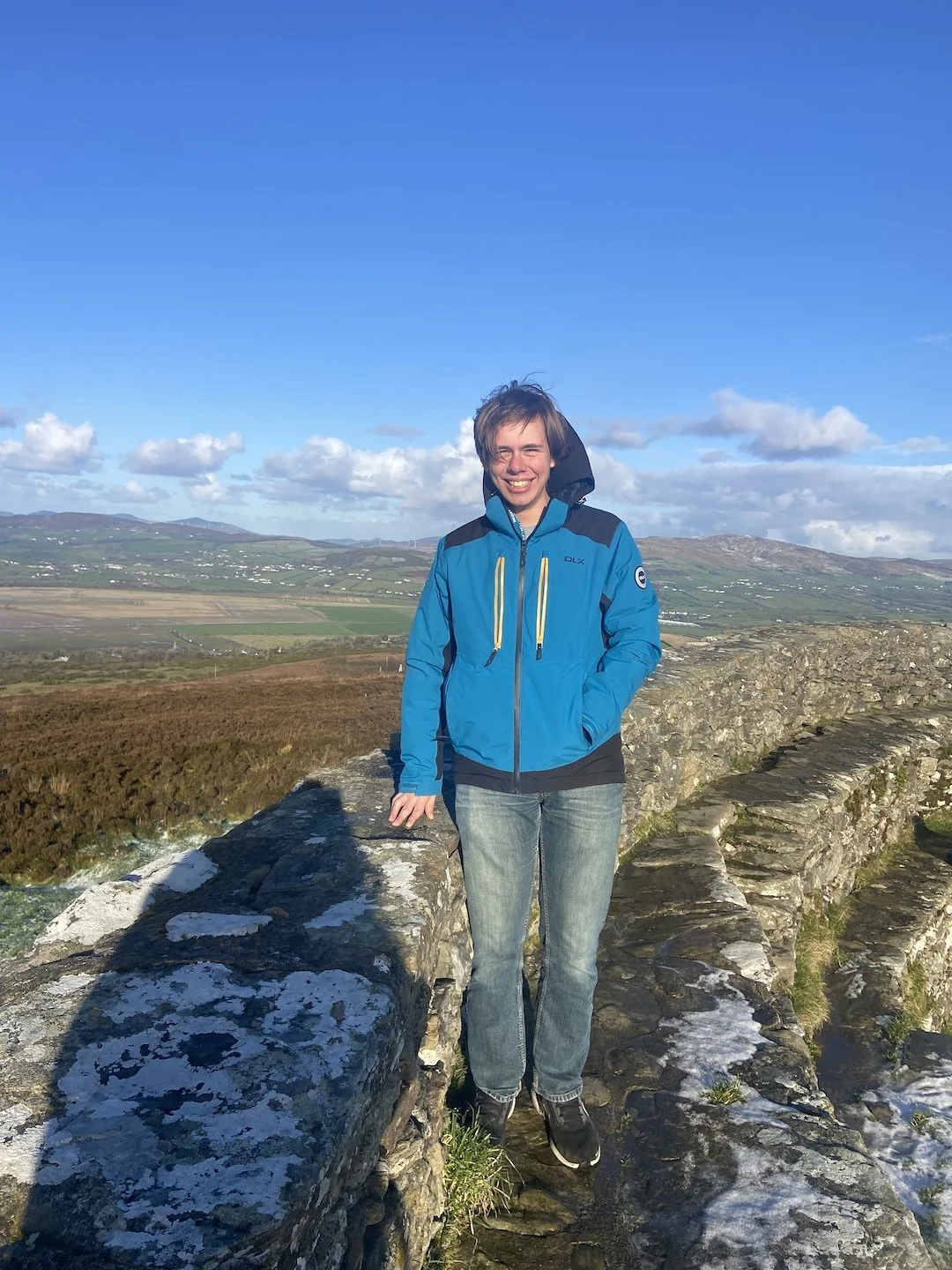
Will Kochel—from Macalester College, St. Paul, USA—at The Grianán of Aileach, County Donegal, Ireland.

Hello! My name is Will, and for the past two months, I’ve interned with the North West Community Network. I am a Political Science student at Macalester College in the United States, specializing in democracy, law and international relations. I came to Derry with the CGEE Conflict, Peace & Transition Study Abroad program to learn about the history of Northern Ireland and the peace process, and the program includes a short placement in the community sector.

I was drawn to NWCN because I wanted to develop a greater understanding of the Community & Voluntary sector and immerse myself in the center of Derry. Their role as an intermediary and capacity builder within the sector seemed like a perfect place to learn, grow, and meet many different community organisations. Throughout my internship, I’ve had the pleasure of working on a variety of projects and meeting a ton of different people and organisations. I have really enjoyed my time here, and I am excited to take what I have learned back to the United States.

Throughout my internship, I have assisted with organizing and promoting many of NWCN’s initiatives. I’ve designed flyers for the Coffee Morning supporting DEEDS, the Strabane Funding Fair, the Foyle Racial Equality Forum re-launch and NWCN’s Annual General Meeting. I also re-designed a government document of services for new migrants in Derry to increase its accessibility and highlight essential services. I didn’t have much prior design experience, but I thoroughly enjoyed the opportunity to gain new skills and apply them in a professional context.

My proudest accomplishment has been producing NWCN’s 2025-2027 Strategic Plan. Working on it not only gave me valuable experience writing and designing but also let me dive into all of NWCN’s different initiatives and future plans, while learning about the important issues facing Derry and the sector. One of my goals coming into the internship was to take on a large, independent project, and I am happy that I successfully kept myself on track and finished everything in time.

"Their relationship-focused, participatory model of community development has expanded my horizons about how community work ought to be done."

Above all, watching Kevin and Roisin’s daily work as community practitioners has given me irreplaceable knowledge about the community and voluntary sector. Their relationship-focused, participatory model of community development has expanded my horizons about how community work ought to be done. Sitting in and writing up notes on meetings has taught me all about the ins and outs of community development. Through my attendance at the Strabane Funding Fair and work on the Strategic Plan, I’ve engaged with the challenges of community development and governmental funding. Taking part in events with Ideas Fund practitioners and University Ethics board members has introduced new ways of conducting academic research with the community sector to make it non-exploitative or parasitic, which I will take with me whenever I conduct research at my home university.

The culture at NWCN has been fantastic. From the beginning, I’ve always been treated with respect, and my co-workers have done everything they can to make my internship as successful as possible. The team is welcoming and friendly, and it’s been an excellent place to learn and grow. I’ve enjoyed having the flexibility with the projects I’ve taken on to approach them how I want, while still having tons of support.

I will miss Derry deeply when I return to the United States. I’ve had a wonderful time studying here, and I am sad that I must leave so soon. I will always be immensely grateful to North West Community Network for helping me immerse myself in the community. I will take NWCN’s values to heart wherever I end up in life and will always be thankful for the wonderful opportunity to intern here.

Read More